The Amazon Kindle is a series of electronic readers designed, manufactured, and marketed globally by Amazon. Operating as a core pillar of Amazon's consumer hardware ecosystem, the Kindle series revolutionized the global publishing industry by introducing wireless, direct-to-consumer digital text distribution. The platform enables users to seamlessly browse, purchase, instantly download, and read digital e-books, newspapers, magazines, academic journals, and various forms of digital print media directly through integrated access to the cloud-linked Kindle Store.
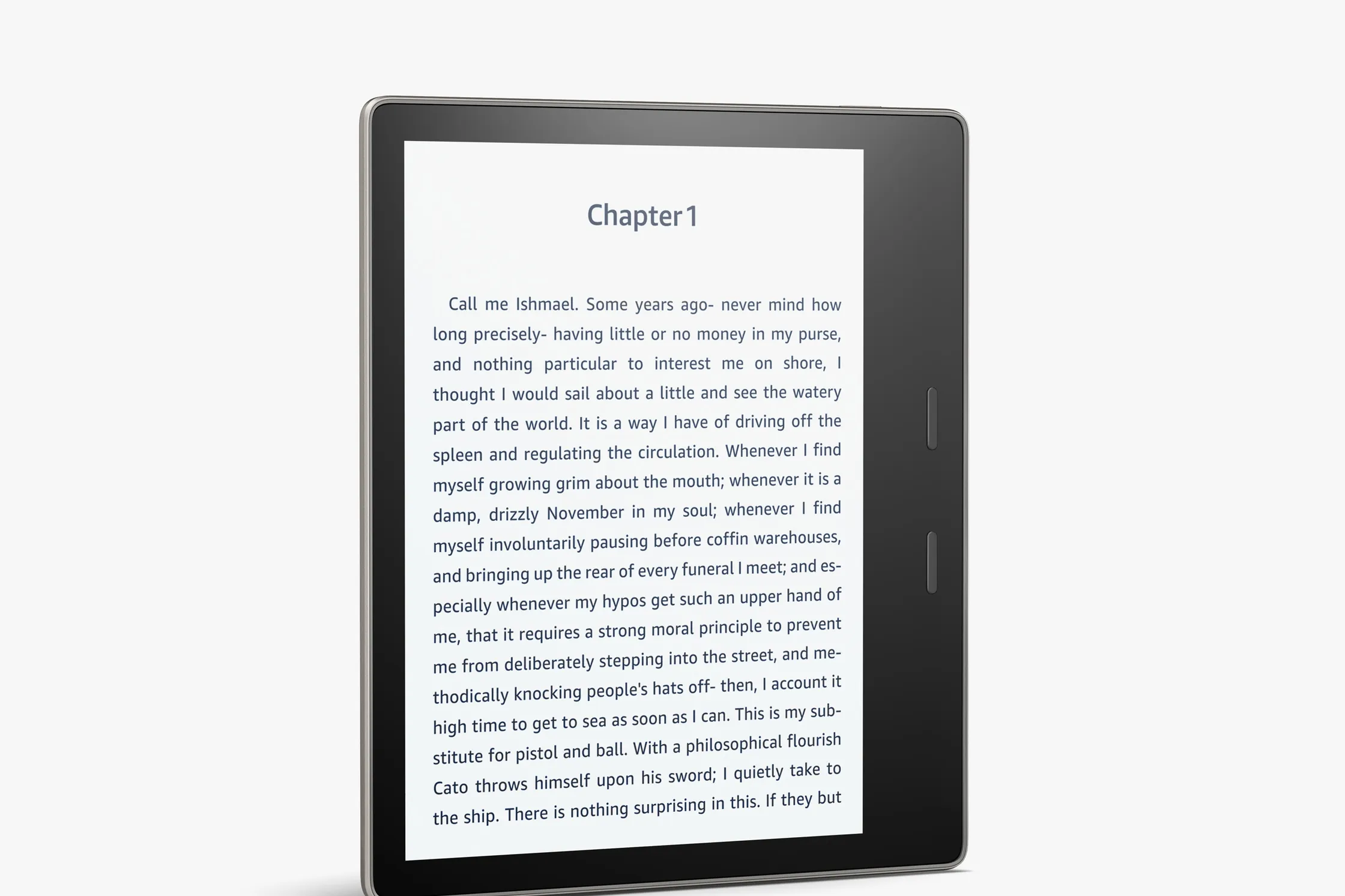

The Amazon Kindle
The first-generation Amazon Kindle was officially unveiled to the public on November 19, 2007, retailing for $399. Proving the massive consumer demand for portable digital libraries, the initial inventory completely sold out within five and a half hours of its launch, and the hardware remained out of stock for five consecutive months. This original device featured an asymmetric design, a full physical QWERTY keyboard, a dedicated scroll wheel for navigation, a headphone jack for audiobooks, and an expandable SD card slot. [1] Over nearly two decades of continuous product engineering, Amazon drastically streamlined the hardware. Physical buttons and keyboard arrays were systematically removed in favor of sleek, multi-touch capacitive glass screens, while internal storage capacities expanded from a mere 250 megabytes to modern baselines of 16 and 32 gigabytes, capable of housing tens of thousands of digital books simultaneously.
Hardware
The defining, foundational technology that separates the Amazon Kindle series from traditional consumer tablets and smartphones is its specialized electronic paper (E Ink) display. Unlike standard liquid crystal displays (LCD) or organic light-emitting diode (OLED) screens, which utilize direct backlighting that shines light outward into the user's eyes, E Ink technology relies on ambient reflection, mimicking the visual profile of physical paper and ink.
The mechanical process of an E Ink display is highly advanced:
The display surface is layered with millions of microscopic microcapsules, each roughly the width of a human hair.Each microcapsule contains positively charged white particles and negatively charged black particles suspended within a clear fluid medium. When the Kindle software initiates a page turn, it sends a localized electronic charge to the microcapsules, forcing the black or white particles to migrate to the top surface of the screen, instantly rendering text or shapes. Because the screen requires electricity only during a brief page refresh, it consumes zero battery power while displaying a static page of text.
This core technology allows Kindle hardware to operate for multiple weeks, and often months, on a single USB-C battery charge. Furthermore, because it reflects light just like natural paper, the screen exhibits zero glare under direct, harsh sunlight and significantly minimizes ocular strain, allowing for comfortable, long-duration reading sessions. Modern iterations feature built-in, low-powered front-lighting arrays that guide light across the surface of the page rather than straight out at the reader, facilitating reading in pitch-black environments without disrupting natural sleep cycles.
Versions
The modern Amazon Kindle ecosystem is strategically divided into several distinct hardware tiers designed to meet varying consumer budgets, lifestyles, and reading habits:
The Standard Amazon Kindle: This remains the baseline, highly portable model. It features a compact 6-inch high-resolution screen (300 pixels per inch), built-in adjustable front lighting, a long-lasting battery, and a lightweight chassis optimized for comfortable one-handed reading.
Amazon Kindle Paperwhite: Positioned as the most popular and versatile tier in the lineup, the Paperwhite increases the screen real estate to a flush-front 6.8-inch display. It introduces an IPX8 waterproof rating, allowing the device to survive accidental submersion in fresh or saltwater pools. It also incorporates an adjustable warm light feature, allowing users to transition the screen tone from cool white to a gentle amber color for optimal nighttime reading.
Amazon Kindle Colorsoft: Marking a significant technological milestone as Amazon's first color e-reader, this premium device utilizes a specialized color E Ink display to render book covers, graphic novels, comic books, and highlighted text selections in soft, vibrant, paper-like colors without sacrificing the multi-week battery life or glare-free performance of traditional monochrome screens.
Amazon Kindle Scribe: Serving as the premium, largest-format entry in the lineup, the Scribe boasts a massive 10.2-inch flush-front display. It comes packaged with a battery-free digital stylus, transforming the traditional e-reader into a dual-purpose digital notebook. Users can write handwritten notes directly onto digital book pages, create custom journals, sketch, and manage daily planners with an authentic pen-on-paper tactile feel.
Reception
The immense success of the Kindle series is deeply tied to its tight integration with Amazon’s digital ecosystem. Utilizing proprietary cloud synchronization protocols, the Kindle system tracks reading metrics across multiple devices. This system automatically synchronizes a user's furthest page read, personal bookmarks, custom text highlights, and handwritten margin notes across dedicated Kindle hardware, personal computers, and mobile applications. Additionally, the ecosystem supports widespread digital lending infrastructure, allowing users to check out digital library books or access massive, rotating subscription lending catalogs with a single click.